 08045804946
 Send Inquiry



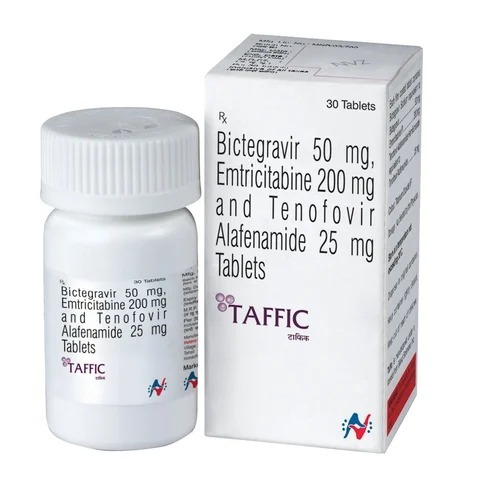
Bictegravir Emtricitabine And Tenofovir alafenamide Tablets
4000 INR/Bottle
Product Details:
- Dosage Form Film-coated Tablets
- Indication HIV-1 Infection Treatment
- Salt Composition Bictegravir 50mg, Emtricitabine 200mg, Tenofovir alafenamide 25mg
- Enzyme Types Not applicable (antiviral agents, not enzymes)
- Feature Single-tablet regimen, once daily dosing
- Ingredients Bictegravir, Emtricitabine, Tenofovir Alafenamide, Excipients
- Application Adult and adolescent patients weighing 25 kg with HIV-1 infection
- Click to View more
X
Bictegravir Emtricitabine And Tenofovir alafenamide Tablets Price And Quantity
- 5 Bottle
- 4000 INR/Bottle
Bictegravir Emtricitabine And Tenofovir alafenamide Tablets Product Specifications
- Not applicable (antiviral agents, not enzymes)
- Film-coated Tablets
- 24 to 36 Months
- HIV-1 Infection Treatment
- Bictegravir, Emtricitabine, Tenofovir Alafenamide, Excipients
- Adult and adolescent patients weighing 25 kg with HIV-1 infection
- Bictegravir 50mg, Emtricitabine 200mg, Tenofovir alafenamide 25mg
- Single-tablet regimen, once daily dosing
- Film-coated, Brownish-orange tablet
- Odorless or characteristic odor; not a fermentation product
- Store below 30C, protect from moisture and light
- 30 tablets per bottle
- J05AR
- Headache, diarrhea, nausea, fatigue, abnormal dreams
- Prescription only
- Oral
- Severe hepatic impairment, hypersensitivity
- Antiretroviral (Integrase Strand Transfer Inhibitor with NRTIs)
- Oval
- Assess renal and hepatic function prior to initiation
- Adults and adolescents (25 kg)
Bictegravir Emtricitabine And Tenofovir alafenamide Tablets Trade Information
- Cash Advance (CA), Cash in Advance (CID)
- 1000 Bottle Per Week
- 4 Days
- All India, South India, Central India, West India, North India, East India, Gujarat, Karnataka, Kerala, Lakshadweep, Mizoram, Meghalaya, Manipur, Andhra Pradesh, Bihar, Chandigarh, Daman and Diu, Goa, Jharkhand, Odisha, Punjab, Assam, Delhi, Dadra and Nagar Haveli, Andaman and Nicobar Islands, Arunachal Pradesh, Chhattisgarh, Haryana, Himachal Pradesh, Jammu and Kashmir, Madhya Pradesh, Maharashtra, Nagaland, Rajasthan, Sikkim, Tamil Nadu, Telangana, Tripura, Pondicherry, Uttar Pradesh, Uttarakhand, West Bengal
Product Description
The combination medication you mentioned consists of three active ingredients:
-
Bictegravir - Bictegravir is an integrase strand transfer inhibitor (INSTI) used in the treatment of HIV/AIDS. It works by blocking the action of integrase, an enzyme necessary for the HIV virus to multiply.
-
Emtricitabine - Emtricitabine is a nucleoside reverse transcriptase inhibitor (NRTI) that inhibits the activity of reverse transcriptase, another enzyme necessary for HIV replication.
-
Tenofovir alafenamide - As mentioned earlier, tenofovir alafenamide (TAF) is a prodrug of tenofovir, which is also an NRTI. TAF is converted into tenofovir in the body and works similarly to emtricitabine to inhibit HIV replication.
This combination medication is commonly prescribed for the treatment of HIV infection in adults and pediatric patients weighing at least 25 kg. The typical dosage for this combination is one tablet containing bictegravir 50 mg, emtricitabine 200 mg, and tenofovir alafenamide 25 mg, taken orally once daily with or without food.
It's crucial to follow your healthcare provider's instructions regarding dosage and administration, and to inform them of any other medications you may be taking to avoid potential drug interactions. Regular monitoring of HIV viral load and kidney function may also be necessary while taking this medication
Comprehensive HIV-1 Treatment
Designed as a complete once-daily regimen, these tablets combine three potent antiretroviral agents, targeting the virus at multiple stages. This simplifies HIV management for adults and adolescents, supporting improved adherence and viral suppression.
Dosage and Administration for Optimal Efficacy
Each dose consists of one film-coated tablet taken orally each day, with or without food. Consistency in administration timing can enhance therapeutic outcomes and stability in viral load suppression.
Safety Considerations and Contraindications
Before starting therapy, renal and hepatic function should be evaluated. Use is contraindicated in cases of severe hepatic impairment or hypersensitivity to any components. Common side effects include headache, diarrhea, and abnormal dreams.
FAQ's of Bictegravir Emtricitabine And Tenofovir alafenamide Tablets:
Q: How should Bictegravir Emtricitabine and Tenofovir Alafenamide Tablets be taken for best results?
A: The tablets should be taken orally once daily, at the same time each day, with or without food. This regimen helps maintain stable drug levels and enhances the effectiveness of HIV-1 treatment.Q: What are the main benefits of using this single-tablet regimen for HIV-1?
A: This formulation combines three antiretroviral agents in one film-coated tablet, making it easier for patients to adhere to therapy while providing robust suppression of HIV-1, improving long-term health outcomes.Q: Who is suitable to use these tablets?
A: They are indicated for adults and adolescents weighing 25 kg or more who have HIV-1 infection. Assessment of liver and kidney function is necessary prior to starting treatment.Q: When should the treatment be avoided or stopped?
A: Treatment should not be started in individuals with severe hepatic impairment or known hypersensitivity to the active ingredients. If serious side effects or allergic reactions occur, consult your physician immediately.Q: Where should the tablets be stored to maintain quality?
A: Store the tablets below 30C, protected from moisture and direct light. Ensure the bottle is tightly closed to prevent exposure that could compromise stability.Q: What precautions are necessary before and during therapy with this medication?
A: Renal and hepatic function must be checked prior to initiating therapy. Ongoing monitoring may be advised, especially in patients with underlying kidney or liver concerns.Q: What are the common side effects experienced with these tablets?
A: Common side effects include headache, nausea, diarrhea, fatigue, and abnormal dreams. Most effects are mild and manageable, but medical guidance should be sought if they become troublesome.Tell us about your requirement

Price:
Quantity
Select Unit
- 50
- 100
- 200
- 250
- 500
- 1000+
Additional detail
Mobile number
Email

Other Products in 'HIV Medicines' category



 Contact Us
- Office No. - 5, Ground Floor, D R Shopping Center, Dattapada Road, Near Hdfc Bank, Borivali East,Mumbai - 400066, Maharashtra, India
- Phone : 08045804946

- Mr Ranjeet Singh (CEO & Founder)
- Mobile : 08045804946
- medisus.pharma007@gmail.com

 Send Inquiry
 Send SMS
MEDISUS PHARMA
All Rights Reserved.(Terms of Use)
Developed and Managed by Infocom Network Private Limited.
Developed and Managed by Infocom Network Private Limited.

