 08045804946
 Send Inquiry



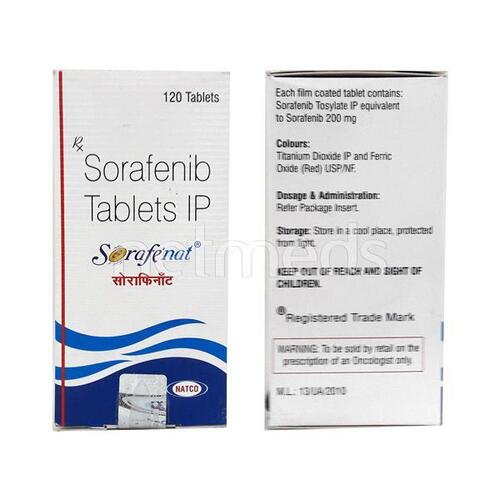
Sorafenib Tablets
7500 INR/Bottle
Product Details:
- Dosage Form Tablet
- Salt Composition Sorafenib Tosylate
- Indication Hepatocellular carcinoma, Renal cell carcinoma, Thyroid carcinoma
- Feature Targeted therapy, oral administration
- Ingredients Each film coated tablet contains Sorafenib Tosylate equivalent to 200 mg Sorafenib
- Application Anticancer medication
- Physical Color/Texture Light orange, round, film-coated tablets
- Click to View more
X
Sorafenib Tablets Price And Quantity
- 7500 INR/Bottle
- 5 Bottle
Sorafenib Tablets Product Specifications
- Sorafenib Tosylate
- Hepatocellular carcinoma, Renal cell carcinoma, Thyroid carcinoma
- Targeted therapy, oral administration
- Anticancer medication
- Each film coated tablet contains Sorafenib Tosylate equivalent to 200 mg Sorafenib
- Store below 30°C, Protect from moisture
- Light orange, round, film-coated tablets
- 24-36 months
- Tablet
- L01XE05
- US FDA, EMA, others (based on market)
- Excipients q.s.
- 284461-73-0
- Prescription only
- May include 'Sorafenat', 'Sorafenib Tosylate Tablets', etc.
- 30 tablets per bottle
- 200 mg
- May include identification codes
- Oral
Sorafenib Tablets Trade Information
- 1000 Bottle Per Week
- 4 Days
- Asia, Australia, Central America, North America, South America, Eastern Europe, Western Europe, Middle East, Africa
- All India, South India, Central India, West India, North India, East India, Gujarat, Karnataka, Kerala, Lakshadweep, Mizoram, Meghalaya, Manipur, Andhra Pradesh, Bihar, Chandigarh, Daman and Diu, Goa, Jharkhand, Odisha, Punjab, Assam, Delhi, Dadra and Nagar Haveli, Andaman and Nicobar Islands, Arunachal Pradesh, Chhattisgarh, Haryana, Himachal Pradesh, Jammu and Kashmir, Madhya Pradesh, Maharashtra, Nagaland, Rajasthan, Sikkim, Tamil Nadu, Telangana, Tripura, Pondicherry, Uttar Pradesh, Uttarakhand, West Bengal
Product Description
Sorafenib is a medication used in the treatment of certain types of cancer, particularly advanced kidney cancer (renal cell carcinoma) and advanced liver cancer (hepatocellular carcinoma). It is available in tablet form, typically in strengths of 200 mg. Here's an overview of its use:
1. Renal Cell Carcinoma Sorafenib is approved for the treatment of advanced renal cell carcinoma (RCC), a type of kidney cancer. It is used in patients who have not responded to previous treatments or who are not candidates for other therapies.
2. Hepatocellular Carcinoma Sorafenib is also used in the treatment of advanced hepatocellular carcinoma (HCC), the most common type of liver cancer. It is indicated for patients with advanced HCC who are not eligible for surgical resection or transplantation and who have not responded to other treatments.
Sorafenib is a multikinase inhibitor, which means it works by inhibiting several enzymes involved in cancer cell growth and proliferation, as well as in tumor angiogenesis (the formation of new blood vessels that tumors need to grow). By blocking these pathways, sorafenib helps slow down the progression of cancer and may prolong survival in some patients.
The standard dose of sorafenib for both renal cell carcinoma and hepatocellular carcinoma is typically 400 mg (two tablets of 200 mg) taken orally twice daily. It's important to take sorafenib exactly as prescribed by a healthcare professional and to follow all instructions provided with the medication.
Common side effects of sorafenib may include diarrhea, fatigue, hypertension (high blood pressure), hand-foot skin reaction (palmar-plantar erythrodysesthesia), rash, nausea, and decreased appetite. It's essential for patients to be monitored closely by their healthcare provider while taking sorafenib to manage any side effects and ensure the treatment remains effective.
As with any cancer treatment, it's crucial to discuss the potential benefits and risks of sorafenib with a healthcare professional to make informed decisions about treatment options.
Powerful Targeted Cancer Therapy
Sorafenib Tablets deliver a cutting-edge approach to treating selected cancers by targeting cancer cells and inhibiting their growth. Approved by regulatory agencies such as US FDA and EMA, this oral therapy provides precision against hepatocellular, renal, and thyroid carcinomas, improving patient outcomes through advanced pharmaceutical science.
Convenient Oral Administration
Designed for patient ease, Sorafenib is administered orally as a film-coated tablet. The 200 mg dosage enables clear and consistent drug delivery, streamlining treatment regimens for individuals who require ongoing cancer therapy in an outpatient setting.
FAQ's of Sorafenib Tablets:
Q: How should Sorafenib Tablets be taken for best results?
A: Sorafenib Tablets (200 mg) are usually taken twice daily as directed by your physician. It is important to swallow the tablets whole with water and to take them on an empty stomach or as your doctor instructs. Always follow your healthcare provider's guidance for optimal efficacy.Q: What types of cancer are treated with Sorafenib Tablets?
A: Sorafenib is prescribed for advanced hepatocellular carcinoma (liver cancer), renal cell carcinoma (kidney cancer), and certain forms of thyroid carcinoma. Your doctor will determine if it is suitable for your specific diagnosis.Q: When should Sorafenib Tablets be avoided or discontinued?
A: Sorafenib Tablets should not be taken without a prescription, and they may be discontinued if severe side effects develop, or if contraindicated by additional health conditions. Always consult your physician before altering or stopping the medication.Q: Where can Sorafenib Tablets be obtained?
A: These tablets are available by prescription only and can be obtained from authorized pharmacies, dealers, distributors, and exporters, particularly in India. Always purchase from reputable sources to ensure product quality.Q: What is the process for storing Sorafenib Tablets properly?
A: Store Sorafenib Tablets below 30C, away from moisture, and keep them in their original bottle until use. Following proper storage helps maintain the medication's shelf life and effectiveness.Q: What are the main benefits of Sorafenib's targeted therapy?
A: Sorafenib provides targeted therapy that inhibits tumor growth, potentially increasing survival rates and improving quality of life for patients with certain cancers. Its oral administration makes therapy more manageable and consistent.Tell us about your requirement

Price:
Quantity
Select Unit
- 50
- 100
- 200
- 250
- 500
- 1000+
Additional detail
Mobile number
Email

Other Products in 'Oncology Drugs & Injections' category



 Contact Us
- Office No. - 5, Ground Floor, D R Shopping Center, Dattapada Road, Near Hdfc Bank, Borivali East,Mumbai - 400066, Maharashtra, India
- Phone : 08045804946

- Mr Ranjeet Singh (CEO & Founder)
- Mobile : 08045804946
- medisus.pharma007@gmail.com

 Send Inquiry
 Send SMS
MEDISUS PHARMA
All Rights Reserved.(Terms of Use)
Developed and Managed by Infocom Network Private Limited.
Developed and Managed by Infocom Network Private Limited.

