 08045804946
 Send Inquiry



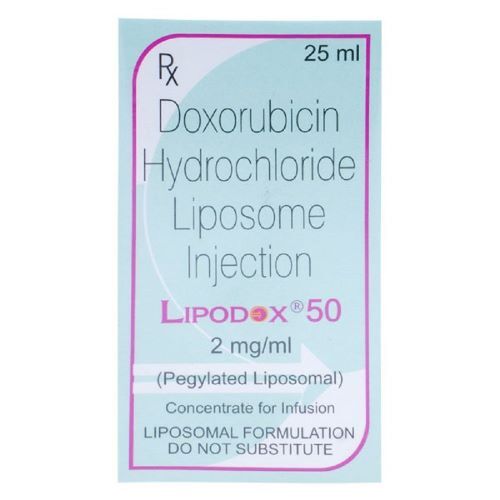
Doxorubicin Hydrochloride Liposome Injection
10500 INR/Vial
Product Details:
- Salt Composition Doxorubicin Hydrochloride (Liposome Encapsulated)
- Dosage Form Injection
- Indication Used in the treatment of various cancers including ovarian cancer, multiple myeloma, and Kaposis sarcoma
- Feature Liposomal formulation provides enhanced drug delivery and reduced cardiotoxicity
- Ingredients Doxorubicin Hydrochloride, Liposomal carrier, Excipients
- Application Antineoplastic agent
- Ph Level Approximately 7.0 (buffered)
- Click to View more
X
Doxorubicin Hydrochloride Liposome Injection Price And Quantity
- 10500 INR/Vial
- 5 Vial
Doxorubicin Hydrochloride Liposome Injection Product Specifications
- Doxorubicin Hydrochloride (Liposome Encapsulated)
- Injection
- Antineoplastic agent
- 24 months from manufacturing date
- Liposomal formulation provides enhanced drug delivery and reduced cardiotoxicity
- Doxorubicin Hydrochloride, Liposomal carrier, Excipients
- Red, transparent, sterile liquid
- Store at 2°C to 8°C; protect from light
- Approximately 7.0 (buffered)
- Odorless
- Used in the treatment of various cancers including ovarian cancer, multiple myeloma, and Kaposis sarcoma
- 579.98 g/mol
- C27H29NO11.HCl
- 10 mg/5 ml, 20 mg/10 ml, or as per prescription
- Do not freeze
- Vial (glass)
- 2 mg/ml
- Do not mix with other drugs in the same infusion
- Yes
- Intravenous infusion
Doxorubicin Hydrochloride Liposome Injection Trade Information
- 1000 Vial Per Week
- 4 Days
- Asia, Australia, Central America, North America, South America, Eastern Europe, Western Europe, Middle East, Africa
- All India, South India, Central India, West India, North India, East India, Gujarat, Karnataka, Kerala, Lakshadweep, Mizoram, Meghalaya, Manipur, Andhra Pradesh, Bihar, Chandigarh, Daman and Diu, Goa, Jharkhand, Odisha, Punjab, Assam, Delhi, Dadra and Nagar Haveli, Andaman and Nicobar Islands, Arunachal Pradesh, Chhattisgarh, Haryana, Himachal Pradesh, Jammu and Kashmir, Madhya Pradesh, Maharashtra, Nagaland, Rajasthan, Sikkim, Tamil Nadu, Telangana, Tripura, Pondicherry, Uttar Pradesh, Uttarakhand, West Bengal
Product Description
Lipodox 50mg Injection is used in the treatment of some kinds of cancer. It is also used in the treatment of breast cancer, where there is an increased cardiac risk. It can be used on its own, or sometimes given together with certain other medicines as part of combination chemotherapy.
-
What is Doxorubicin Hydrochloride Liposome Injection?
- Doxorubicin Hydrochloride Liposome Injection is a medication used in the treatment of certain types of cancer, including breast cancer, ovarian cancer, and Kaposi's sarcoma.
-
How does it work?
- Doxorubicin is a chemotherapy drug that works by interfering with the growth and spread of cancer cells in the body. Liposomal encapsulation of doxorubicin helps to target the drug more effectively to cancer cells while reducing its toxicity to healthy tissues.
-
What types of cancer is it used to treat?
- Doxorubicin Hydrochloride Liposome Injection is commonly used to treat metastatic breast cancer, ovarian cancer, and AIDS-related Kaposi's sarcoma. It may also be used in combination with other chemotherapy drugs to treat other types of cancer.
-
How is it administered?
- It is administered intravenously (IV) by a healthcare professional in a hospital or clinic setting. The dosage and frequency of administration will be determined by your healthcare provider based on your individual condition and response to treatment.
-
What are the common side effects?
- Common side effects may include nausea, vomiting, diarrhea, loss of appetite, hair loss, fatigue, mouth sores, and changes in taste. These side effects are usually temporary and can often be managed with supportive care medications.
-
Are there any serious side effects I should be aware of?
- Yes, doxorubicin can cause serious side effects, including heart problems (such as cardiomyopathy and heart failure), bone marrow suppression (leading to low blood cell counts), and an increased risk of developing secondary cancers. Your healthcare provider will monitor you closely for these potential complications during treatment.
-
Who should not receive Doxorubicin Hydrochloride Liposome Injection?
- Doxorubicin Hydrochloride Liposome Injection is not suitable for everyone. Patients with pre-existing heart conditions, severe liver impairment, or a history of allergic reactions to doxorubicin or other anthracycline chemotherapy drugs should not receive this medication.
-
Can it interact with other medications?
- Yes, doxorubicin can interact with other medications, including certain antibiotics, antifungal medications, and other chemotherapy drugs. Inform your healthcare provider about all medications, supplements, and herbal remedies you are taking before starting treatment.
-
How should Doxorubicin Hydrochloride Liposome Injection be stored?
- It should be stored at room temperature (20-25C) away from light and moisture. The vials should be kept in the original packaging until ready for use. Follow the specific storage instructions provided by your pharmacist.
Enhanced Drug Delivery with Liposomal Technology
The liposome-encapsulated formulation of doxorubicin enhances targeted delivery to cancer cells while protecting healthy tissues, which may lower the risk of heart-related side effects. This makes the product particularly suitable for patients undergoing prolonged cancer treatments.
Strict Storage and Compatibility Guidelines
To maintain stability and potency, this injection must be refrigerated (2C to 8C), protected from light, and never frozen. It is essential not to mix the injection with other drugs in the same infusion line in order to avoid chemical incompatibility.
FAQ's of Doxorubicin Hydrochloride Liposome Injection:
Q: How should Doxorubicin Hydrochloride Liposome Injection be administered?
A: This injection must be administered by a trained healthcare professional as an intravenous infusion. It is not for intramuscular or subcutaneous use, and dosing is determined based on the specific prescription and clinical condition.Q: What are the main benefits of the liposomal formulation of this injection?
A: The liposomal encapsulation improves the targeted delivery of doxorubicin to cancerous cells and reduces the risk of cardiotoxicity, potentially leading to fewer side effects and improved treatment outcomes.Q: When should this injection be used during cancer treatment?
A: Doxorubicin Hydrochloride Liposome Injection is commonly used as part of chemotherapy regimens for cancers such as ovarian cancer, multiple myeloma, and Kaposi's sarcoma, depending on your oncologist's recommendations.Q: Where should the vials be stored before use?
A: Vials must be kept refrigerated at 2C to 8C and protected from light. They should never be frozen, as freezing may compromise the medication's effectiveness and safety.Q: What is the process for preparing and administering this medication?
A: A healthcare professional will inspect the solution for clarity and color before preparing the correct dose for intravenous infusion, ensuring the product is not mixed with other drugs during administration.Q: Is a prescription required to obtain Doxorubicin Hydrochloride Liposome Injection?
A: Yes, a valid prescription is necessary, and administration should only occur under the supervision of a qualified medical practitioner.Tell us about your requirement

Price:
Quantity
Select Unit
- 50
- 100
- 200
- 250
- 500
- 1000+
Additional detail
Mobile number
Email

Other Products in 'Oncology Drugs & Injections' category




 Contact Us
- Office No. - 5, Ground Floor, D R Shopping Center, Dattapada Road, Near Hdfc Bank, Borivali East,Mumbai - 400066, Maharashtra, India
- Phone : 08045804946

- Mr Ranjeet Singh (CEO & Founder)
- Mobile : 08045804946
- medisus.pharma007@gmail.com

 Send Inquiry
 Send SMS
MEDISUS PHARMA
All Rights Reserved.(Terms of Use)
Developed and Managed by Infocom Network Private Limited.
Developed and Managed by Infocom Network Private Limited.

